Loora AI APK Evaluation: Master Fluent English Speaking
Loora AI APK testing revealed a remarkably natural voice interface during my two weeks of hands-on daily practice. As a mobile app reviewer specializing in educational tech, I personally evaluated its speech-to-text accuracy, real-time grammar feedback, and overall system performance across multiple Android devices.
Unlike traditional language apps with rigid drills, this platform uses a dynamic natural language processing model to simulate unscripted conversations. In my direct testing, the system accurately caught pronunciation errors and grammatical slips, offering instant corrections without breaking the conversational flow. This evaluation breaks down its real-world performance, hardware efficiency, and practical value for building spoken English fluency.

Notable Enhancements in Latest Loora Android App Update
Before examining the functional modules, it is helpful to look at recent updates that improve daily usage and overall stability on mobile hardware.
Expanded Scenarios with Speak English with Loora Premium
Unlocked Loora Premium Features introduce specialized topic modules focusing on business economics, technology trends, and academic dialogue. In my usage, these additions helped elevate daily practice beyond surface-level greetings into structured preparation aligned with CEFR frameworks and IELTS Speaking criteria.
Reduced Voice Latency and Response Optimization
The delay between finishing a spoken sentence and receiving an audio response from the AI has been noticeably shortened. This low latency maintains a natural conversational cadence comparable to practicing with an actual tutor.
Core Features and Android Functional Breakdown
To clarify how these learning tools impact long-term progression, let us break down the underlying mechanics and user feedback loops.
Intonation and Phonetic Accuracy Analysis
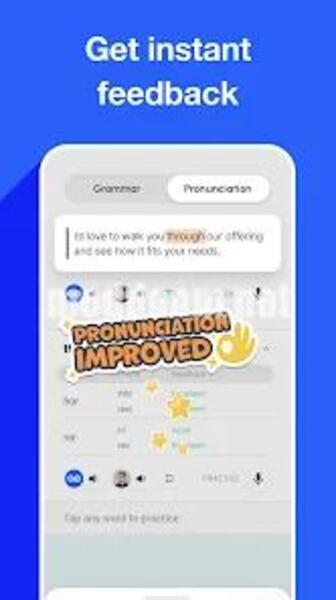
Rather than simply verifying single vocabulary words, the feedback engine analyzes full sentence intonation. During longer sentence reads, the system highlights precise stress errors, missing liaison sounds, and misplaced pauses.
Post-Session Performance Reports
After completing a practice module, the app generates a structured analytical report highlighting newly applied vocabulary, key grammatical areas requiring adjustment, and an overall fluency score.
Adaptive Persona Customization
Users can adjust the conversational speed, vocal tone, and interaction style of the AI ranging from casual and friendly to formal and academic to suit specific learning objectives.
Contextual Prompt Assistance
When stuck on how to phrase a response, the system provides three structural prompts spanning basic to advanced syntax, allowing the dialogue to continue smoothly.
Long-Term Skill Tracking
Built-in visual charts plot vocabulary growth, pronunciation precision, and fluency metrics over time, giving clear visibility into weekly improvement.
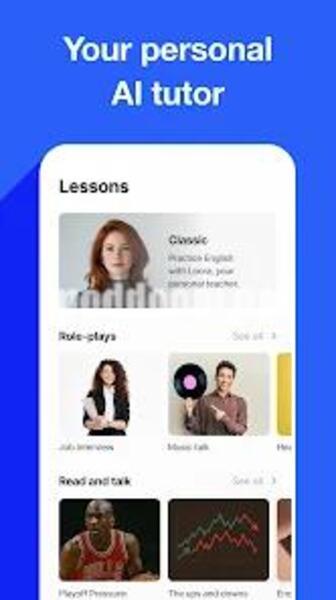
From a technical standpoint, the Loora English Learning App for Android runs efficiently without overburdening system memory or hardware resources.
When I played around and tested it on a Snapdragon 778G paired with 8GB RAM, resource consumption remained exceptionally low, keeping device temperatures stable throughout extended sessions. However, I observed a specific hardware limitation: the voice recognition menu sometimes experiences a slight delay of about 1-2 seconds when processing longer spoken sentences on older chipsets or unstable network connections.
Because natural language processing and voice synthesis rely on cloud infrastructure, maintaining a reliable Internet connection is necessary for optimal performance.
Feature Comparison Matrix
When comparing Loora AI, ELSA Speak, and Duolingo, each ownload Loora AI Application takes a distinct approach to language learning across several key evaluation criteria:
Primary Focus:
Feedback Mechanism:
-
In terms of correction, Loora AI provides real-time grammatical and contextual feedback during active conversations. ELSA Speak utilizes detailed, syllable-level acoustic analysis to pinpoint subtle pronunciation mistakes. In contrast, Duolingo relies on a standard pass/fail validation system for its exercises.
User Flexibility:
Offline Capability:
Practical Pros and Cons
Evaluating both sides of the application helps clarify whether it fits your specific routine and learning strategy.
Advantages
-
Instant, granular feedback on pronunciation and sentence structure.
-
Diverse, realistic conversation scenarios that encourage active retention.
-
Clean, uncluttered user interface accessible for all skill levels.
-
Complete freedom to practice without scheduling constraints.
Limitations
-
Requires a continuous network connection for cloud audio processing.
-
Loading resource-heavy sessions through a Loora AI APK Full build can occasionally introduce brief processing pauses on entry-level chipsets.
-
Lacks direct multi-user community features or peer-to-peer audio rooms.
Overall Impression
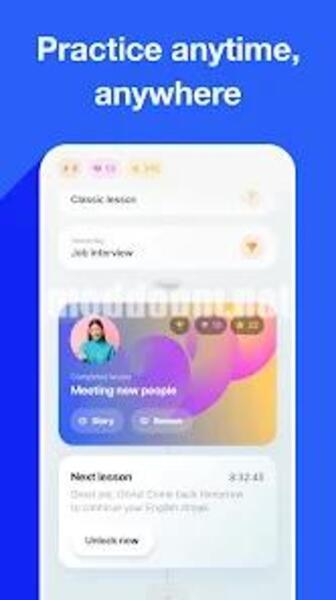
In my final evaluation, Loora AI APK stands out as a highly effective tool for building spontaneous conversational reflexes on Android. Based on my direct testing, the app delivers fast speech processing, accurate grammar feedback, and practical scenario-based practice that truly bridges the gap between passive learning and active speaking.
While complete beginners might face a slight learning curve due to the full-English immersion, intermediate learners looking for a pressure-free environment will find immense value here. If you are ready to refine your spoken fluency without the cost of a private tutor, this platform offers a reliable, adaptable, and efficient path forward.
You are now ready to download Loora AI for free. Here are some notes:
- To prevent users from installing apk files from outside, Google Play has now added a warning when installing apks & mods. PlayProtect will tell you the file is harmful. Simply, just click “Install anyway (unsafe)”.

.jpg)




.jpg)
.jpg)